Philodendron Care: A Simple Guide for Vining and Upright Types
If you're new to houseplants, a philodendron is one of the best places to start. They're forgiving, they grow steadily, and there's a huge range of them, from little trailing vines to big upright plants with dramatic leaves.
Here's the philodendron care basics, and the one thing that changes depending on which type you have.
The short version
Bright indirect light, water when the top 1 to 2 inches of soil are dry, and give climbing types something to climb. Philodendrons are easygoing as long as you don't drown them.
Know which type you have
There are two main kinds.
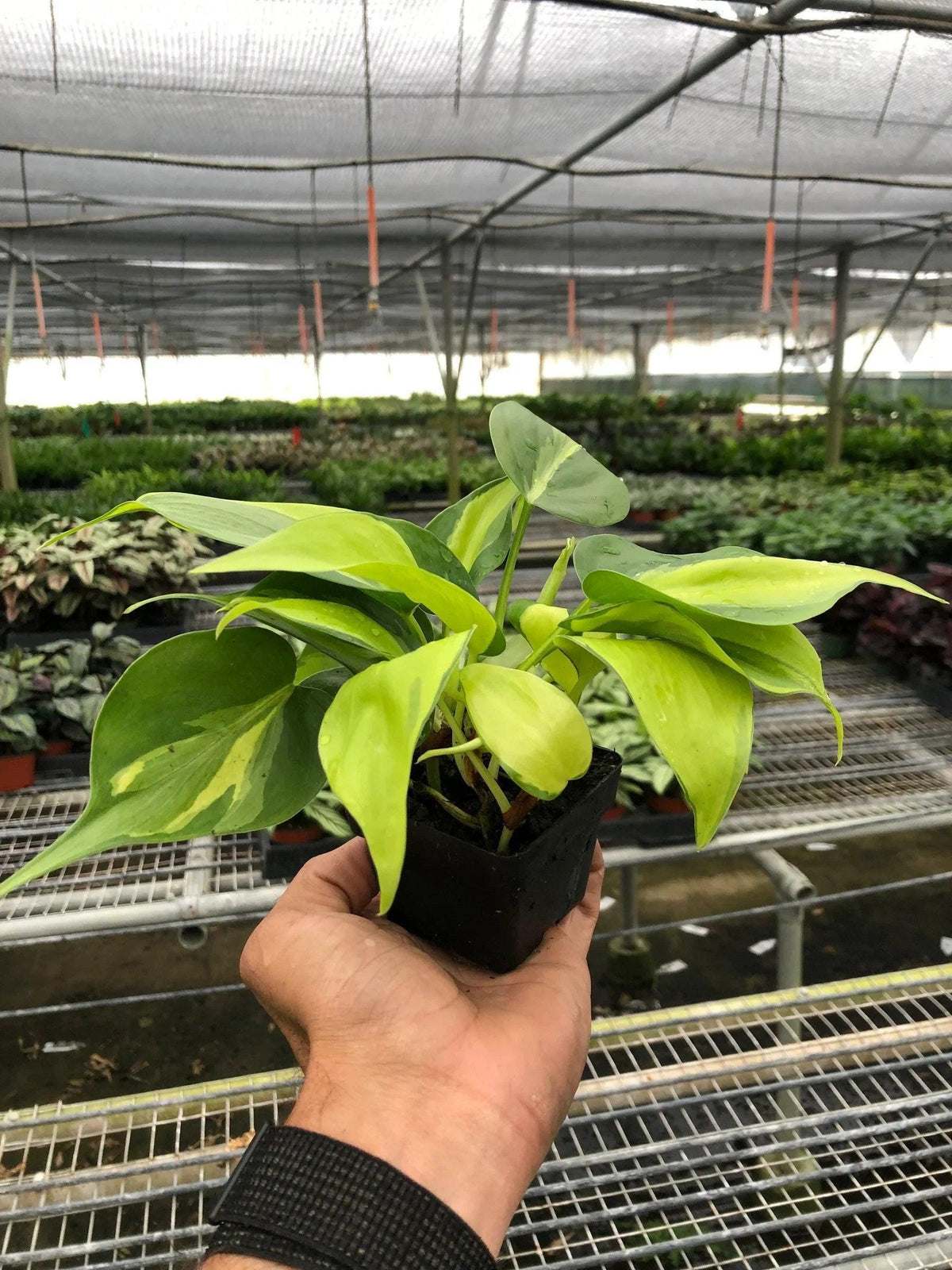
- Vining (climbing) philodendrons like the Heartleaf Philodendron and Philodendron 'Brasil'. Long stems that trail from a shelf or climb a pole.
- Self-heading (upright) philodendrons like Birkin or Congo types. They grow from a central stem and stay more compact and bushy.
Care is almost the same. The difference is support. Climbers grow bigger, lusher leaves when they have a moss pole or trellis to climb.
Light
Philodendrons come from tropical forests in Central and South America, where they grow under and up the trees.
- Best: bright, indirect light.
- OK: lower light. Many will live there, but growth slows and variegation can fade.
- Avoid: direct sun. The leaves are too delicate and can scorch.
If your plant's colors are fading or the vines are getting long with big gaps between leaves, give it more light.
Water
- Water when the top 1 to 2 inches of soil are dry.
- Water thoroughly, let it drain, and never leave it sitting in water.
- Let it dry a little more in winter.
They like moisture but hate soggy roots. Yellow leaves are usually the first sign of too much water. See why plant leaves turn yellow for how to tell.
Soil
A well-draining aroid mix works best: potting soil with orchid bark and perlite. That gives the roots the air they need. Use a pot with a drainage hole.
Humidity and temperature
Normal household humidity is usually fine for common philodendrons like the Heartleaf. Keep them away from cold drafts and heating or AC vents. If you're in a warm zone and put them outside for the summer, keep them in shade and bring them in before it gets cold.
Keeping it full
Vining philodendrons can get long and stringy. To keep them full:
- Give them more light.
- Trim them back. Cutting a vine encourages new growth closer to the pot.
- Turn the pot now and then so it grows evenly.
It's the same trick we use for pothos, which we cover in how to get a fuller pothos. And if you're not sure whether you have a pothos or a philodendron, we wrote a whole post on pothos vs philodendron.
Propagation
This is one of the easiest plants to propagate. Cut a stem just below a node (the little bump where the leaf meets the stem) and put it in water or soil. Roots usually show up fast.
Wipe the leaves
Wipe leaves with a damp cloth every so often. They stay glossy and use the light better.
Common issues
- Yellow leaves → usually overwatering or poor drainage.
- Small leaves → needs more light, or a climber that needs support.
- Long, bare vines → more light and a trim.
- Variegation fading → more light.
- Brown, crispy spots → too much direct sun or the soil dried out too far.
- Pests → spider mites, aphids and mealybugs. Check under the leaves and treat early with neem oil or insecticidal soap.
Three philodendrons we like
- Philodendron Cordatum Heartleaf - soft, heart-shaped green leaves. The classic, and it handles medium light well.
- Philodendron 'Brasil' - heart-shaped leaves streaked with lime and deep green.
- Philodendron 'Pink Princess' - dark leaves splashed with pink. Needs good light to keep its color.
There are plenty more in our Philodendron collection. For other plants, check out our Plant Care Guide.
Pets
Philodendrons are toxic to pets, so keep them up high if you have curious animals.
The takeaway
Bright indirect light, water when the top inch or two is dry, and give the climbers something to climb. Philodendrons will do the rest. Want an easy first one? Start with the Heartleaf Philodendron. Let us know if you have any questions!
Keep reading
Happy growing,
Alex
Chief Leaf Officer, Austin Jungle Co.