Bird's Nest Fern Care: How to Water It (Hint: Not in the Middle)
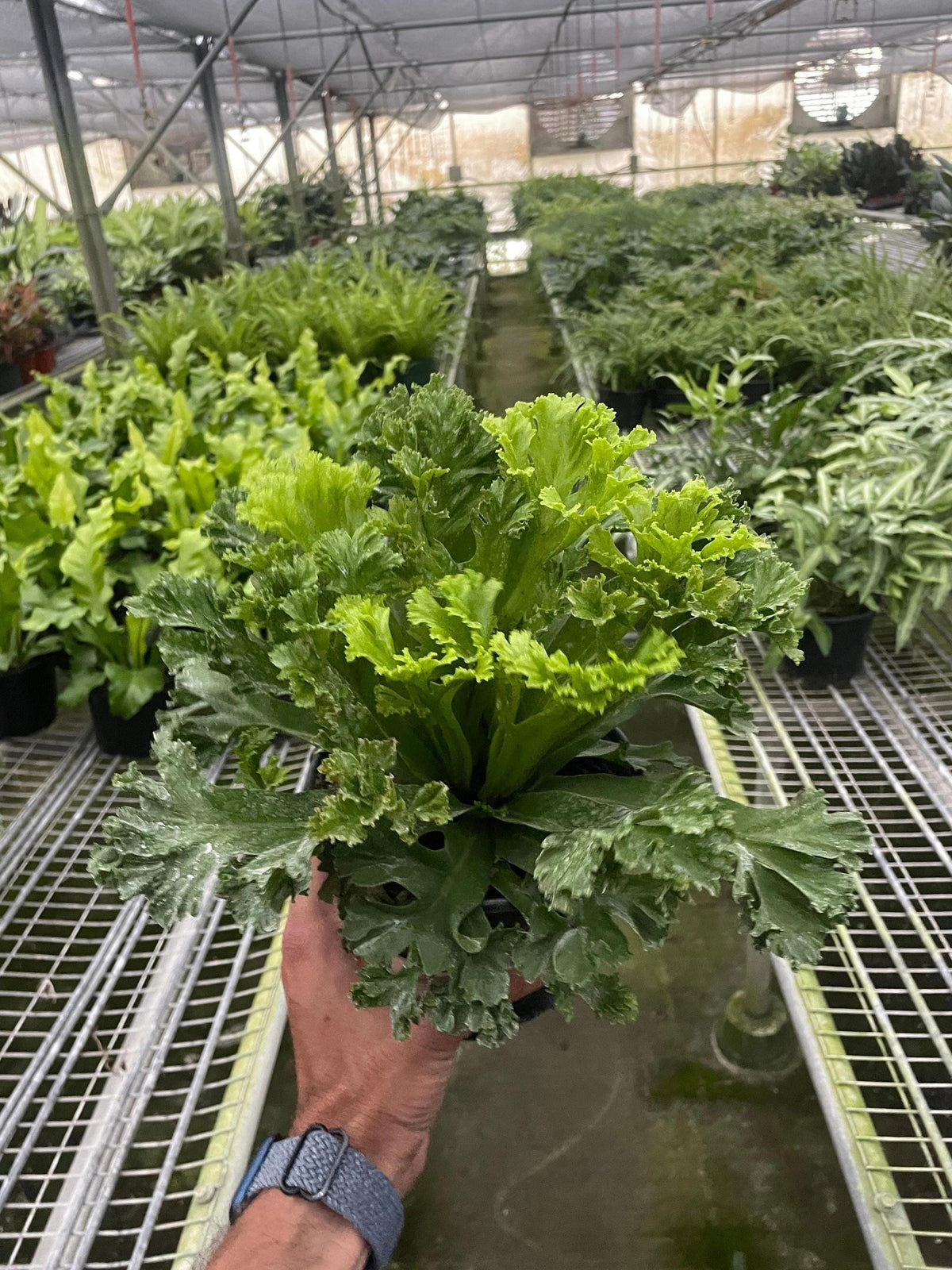
Bird's nest ferns don't look like the ferns most people picture. No lacy fronds here. Instead you get wide, glossy, wavy leaves that grow out of a center rosette, kind of like a nest. They're one of my favorite ferns for a bathroom or kitchen.
They're pretty manageable, too, as long as you know the one big rule.
The short version
Bright indirect light, soil that stays evenly moist, a little extra humidity, and water around the base, never into the center. That's bird's nest fern care.
The big rule: don't water the center
New fronds grow from the middle of the plant, in that nest-like crown. If water sits in there, it can rot. So when you water, pour it on the soil around the base and keep it out of the middle.
This is the mistake we see the most with these plants.
Light
- Best: bright, indirect light. Think the dappled light under a tree.
- OK: medium light. Growth will be slower.
- Avoid: direct sun. It can burn and bleach the fronds.
A bathroom or kitchen with a window is a great spot, since those rooms tend to be more humid too. More ideas in the best plants for a bathroom.
Water
- Keep the soil evenly moist, but not soggy.
- Don't let it dry out for long. Ferns hate drying out, and once fronds crisp up, they don't come back.
- Water around the base, not into the crown.
- Check more often in winter if your heat is on. Dry indoor air pulls moisture out fast.
Our winter fern care guide covers the cold months in more detail.
Humidity
Bird's nest ferns come from humid tropical forests, where many of them grow on trees and rocks instead of in the ground. They like more humidity than most homes have.
- Put a small humidifier nearby.
- Set the pot on a pebble tray with water.
- Group it with other plants.
Skip the misting. It doesn't do much, and wet water sitting in the crown is exactly what we're trying to avoid. See how to raise humidity without misting for more.
Soil and pot
Use a rich mix that holds some moisture but still drains, like regular potting soil with peat or coco coir mixed in. A pot with a drainage hole is a must. They have fairly small root systems, so they don't need a big pot.
Handle with care
The young fronds unfurling from the center are delicate. Try not to touch or bend them while they're growing, or they can grow in with dents and marks.
Brown lines under the leaves?
If you see neat rows of brown lines or dots on the underside of older fronds, those are usually spores, which is how ferns reproduce. That's normal, not a disease. Random brown spots or crispy brown edges are a different story.
Common issues
- Crispy brown edges or tips → usually dry air or the soil drying out. See brown crispy leaf tips.
- Soft, brown center → water sitting in the crown, or overwatering. Let it dry slightly and water around the base from now on.
- Pale, bleached fronds → too much direct sun. Move it back from the window.
- Fronds dropping → check for underwatering or a drafty spot.
- Pests → spider mites can show up when it's too dry. Keep humidity up and wipe the leaves now and then.
Three bird's nest ferns we like
- Bird's Nest 'Leslie' Fern - glossy green fronds with a ruffled, crested center. Fuller looking than a standard bird's nest.
- Bird's Nest 'Victoria' Fern - fronds that ripple and split at the tips.
- Fern 'Bird's Nest Hurricane' - fronds that twist and curl through the center, like it's been through a storm.
All three take the same care. You can see the rest of our ferns in the Fern collection. For general fern tips, check out our Plant Care Guide.
Pets
If you have pets, check your exact plant on the ASPCA list before it goes somewhere they can reach.
The takeaway
Bright indirect light, even moisture, a little humidity, and keep the water out of the middle. That's it. Ready for one? Start with the Bird's Nest 'Leslie' Fern. Let us know if you have any questions!
Keep reading
Happy growing,
Alex
Chief Leaf Officer, Austin Jungle Co.