Why Are My Plant's Leaves Turning Yellow? 7 Common Causes
A yellow leaf is probably the most common plant question there is. It's easy to panic and start changing everything at once. Don't. Most of the time the cause is simple, and the plant is telling you exactly what's wrong.
Here's how to read it.
The short version
Check the soil first. If it's wet, you're probably overwatering. If it's bone dry, you're underwatering. If it's just one old leaf at the bottom, it's probably nothing. Light is the next thing to look at.
First, look at which leaves are yellow
Where the yellow shows up tells you a lot.
- One or two old leaves at the bottom → usually normal aging.
- Lots of leaves at once, soft or limp → usually too much water.
- Yellow with crispy brown edges → usually too little water or very dry air.
- Pale, washed-out leaves all over → usually a light problem.
- Yellow speckles or stippling, maybe fine webbing → check for pests.
1. Overwatering (the big one)
This is the cause most of the time. (Not sure which one you've got? See overwatered vs underwatered plant signs.) When the soil stays wet, roots can't get air, and they start to rot. The leaves turn yellow and often feel soft, and the soil may smell sour.
What to do: stop watering and let the soil dry out. Make sure the pot has a drainage hole and isn't sitting in water. If the stems are mushy at the base, take the plant out and check the roots. Healthy roots are firm and light colored. Rotten ones are dark and mushy. Cut those off and repot in fresh, dry mix.
Plants like ZZs, snake plants and peperomia are especially easy to overwater because they store water in their stems and roots. Our ZZ plant, for example, would much rather be too dry than too wet.
2. Underwatering
When a plant goes too long without water, leaves can turn yellow, then brown and crispy, usually starting at the edges. The soil pulls away from the sides of the pot and the pot feels light.
What to do: water thoroughly until it runs out the bottom, then check our guide to how often to water houseplants so it doesn't happen again. If the soil is so dry that water runs straight through, water again a few minutes later, or set the pot in a tray of water for a bit, then let it drain.
3. Old leaves aging out
Plants drop their oldest leaves as they grow. If it's one leaf at a time at the bottom of the plant, and the new growth looks healthy, that's normal. Trim it off and move on.
4. Not enough light
A plant in a dim spot can't support all its leaves, so it lets some go. You'll often see pale, yellowing leaves along with slow, stretched growth.
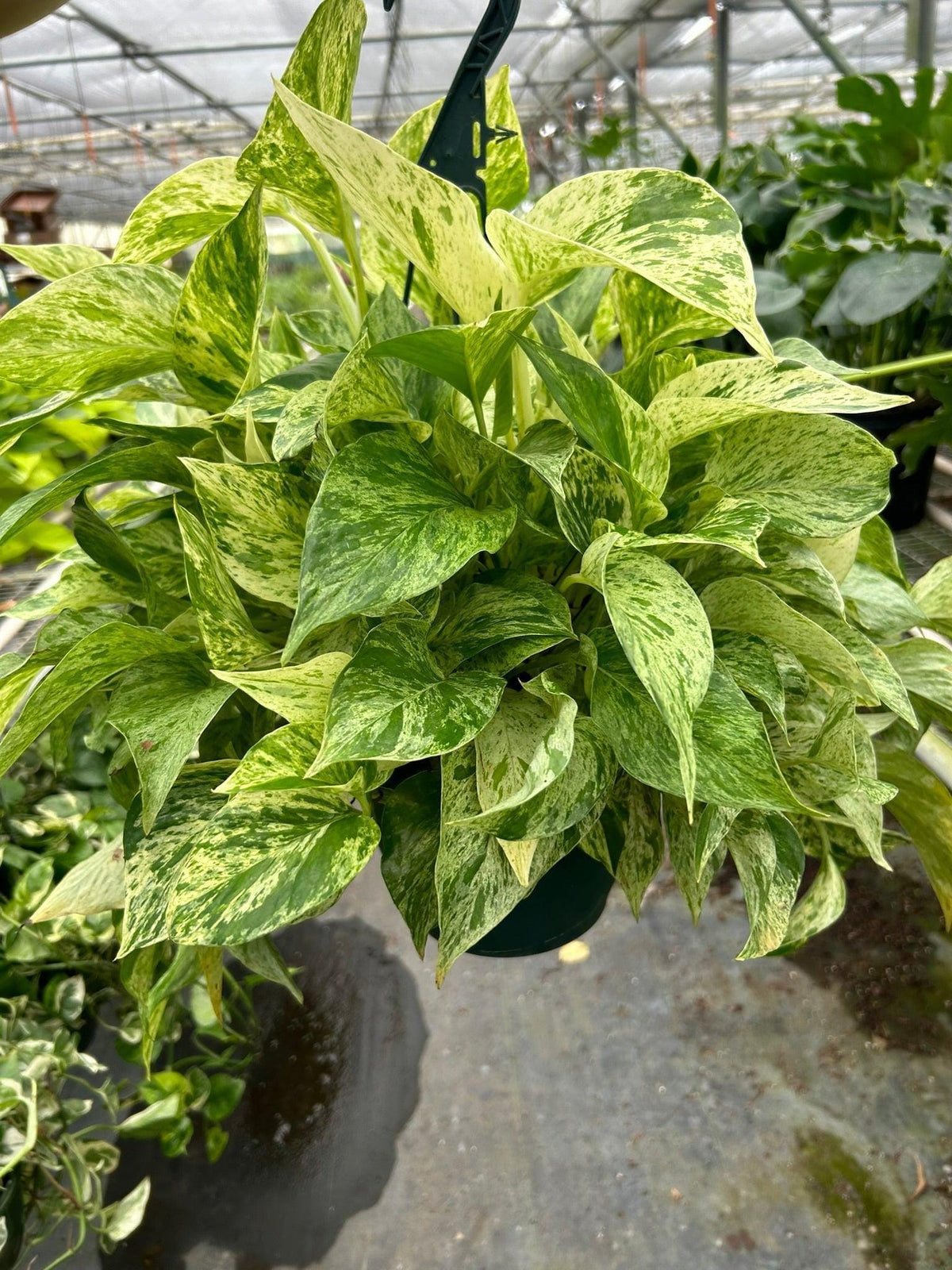
What to do: move it closer to a bright window, out of harsh direct sun. Winter makes this worse because the days are shorter. If your home is just dim, pick plants that handle it, like the ones in our Low Light Plants collection. A trailing plant like Pothos 'Marble Queen' also needs good light to keep its white, and our pothos care post covers that.
5. Too much direct sun
The opposite problem. Strong sun through a window can bleach or scorch leaves, leaving yellow or white patches on the side facing the glass.
What to do: pull it back from the window, or filter the light with a sheer curtain.
6. Cold drafts and sudden changes
A cold blast from a door, a heating vent, or a big move can stress a plant, and yellow leaves are a common response. Keep plants away from vents and drafty doors, especially in winter.
7. Pests or hunger
Spider mites and other pests can cause yellow speckles. Look under the leaves for webbing or tiny moving dots. If you find them, isolate the plant, wipe the leaves, and treat early with neem oil or insecticidal soap.
A plant that hasn't been fed in a long time can also yellow slowly, starting with older leaves. A diluted houseplant fertilizer during spring and summer usually takes care of it. Don't feed a plant that's already stressed from root rot, though.
Just got a new plant?
A few yellow or dropped leaves after shipping are normal. The plant has been in a dark box and is adjusting to your home. Leave it in its grower pot, put it in bright indirect light, skip the fertilizer for a month, and give it a week or two. If it arrives damaged, send us a photo. Our 30-Day Healthy Arrival Guarantee gives you 30 days to get a replacement.
Should I cut off yellow leaves?
Yes, once you've figured out the cause. A yellow leaf won't turn green again, and trimming it keeps the plant looking good. Cut it off at the base of the stem with clean scissors.
Where to go from here
For plant-by-plant care, check out our Plant Care Guide. And if you want something more forgiving, take a look at our Hard to Kill Plants collection.
The takeaway
Check the soil, check the light, and don't change five things at once. Fix one thing, give it a couple of weeks, and watch the new growth. Let us know if you have any questions!
Keep reading
Happy growing,
Alex
Chief Leaf Officer, Austin Jungle Co.