Winter Fern Care: How to Stop the Crispy Fronds
Ferns have a reputation for being impossible indoors. I don't buy it. They're sensitive, not impossible. They just tell on you faster than most plants, and winter is when they do it.
The heater kicks on, the air dries out, the days get short, and suddenly your lush fern looks like a bag of potato chips. Here's how to keep yours green until spring.
The short version
If you only remember one thing: don't let a fern dry out, and don't try to fix dry air with a spray bottle. Keep the soil evenly moist, raise the humidity the right way, and keep the plant away from vents and drafts.
Why winter is hard on ferns
Ferns grow naturally all over the world, from tropical rainforests to temperate woodlands. Almost always in shady, humid spots. A heated house in January is pretty much the opposite of that.
- Dry air. Heating pulls moisture out of the air and out of the pot.
- Less light. Shorter days and weaker sun.
- Drafts. Cold air from doors and windows, hot air from vents.
Most winter fern problems come back to one of those three.
Light
Ferns love bright, indirect light. Think dappled shade, like under a tree canopy. Too much direct sun will crisp the fronds. Too little light and they get sparse and sad.
A spot near a bright window works well in winter. Just keep the fronds from pressing up against cold glass.
Water
This is the big one. Keep the soil consistently moist, but not soggy. Ferns hate drying out, and once they crisp up, it's hard to bring them back.
- Check often. A dry, heated home dries out a pot faster than you'd think. Don't cut back on autopilot just because it's winter. (Snake plants and peperomia want less water in winter. Ferns are different.)
- Water when the surface starts to feel dry, then let the extra drain out.
- Don't leave it sitting in water. Moist is good. Soggy is not.
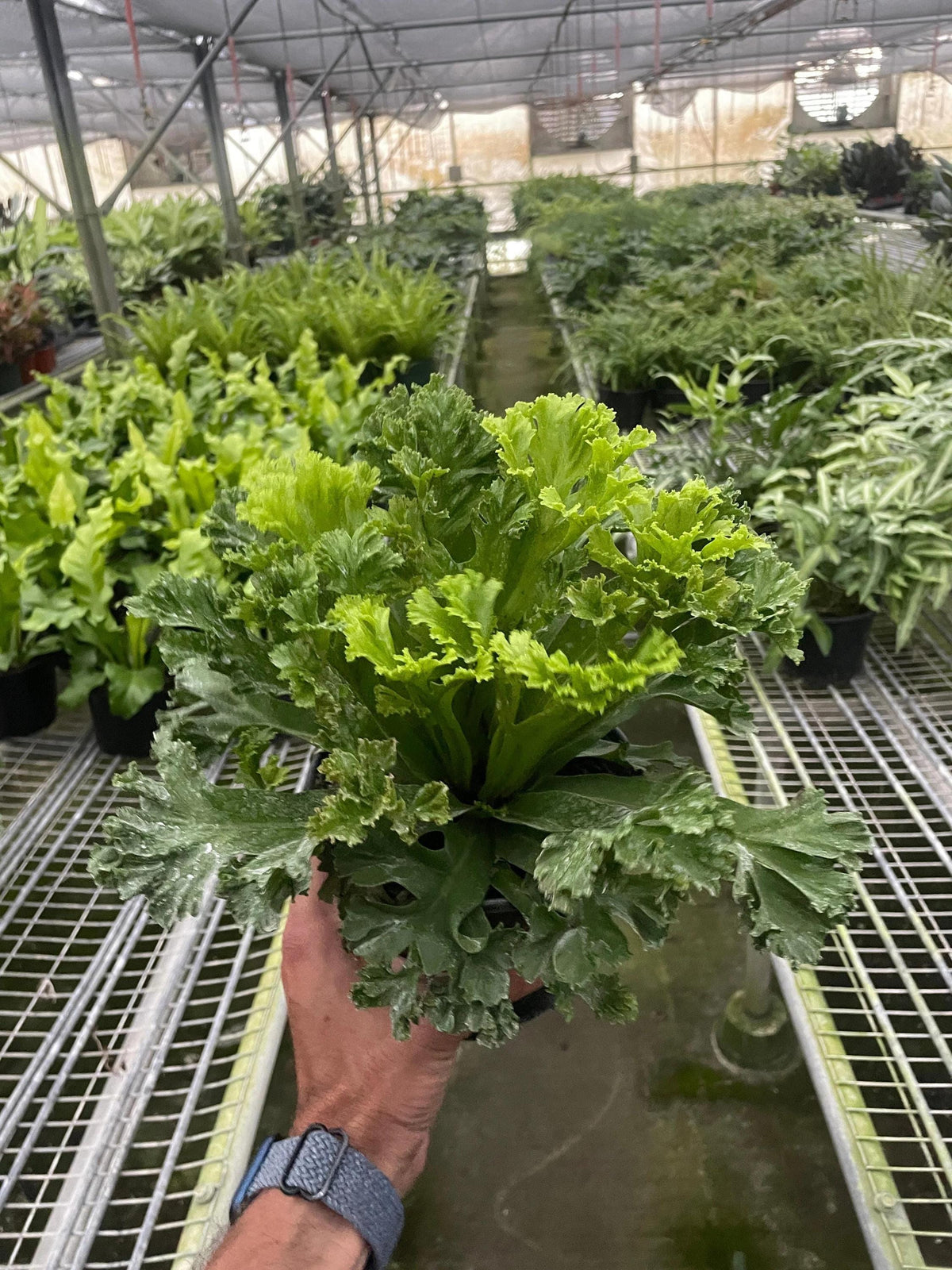
If you have a bird's nest fern, water the soil around the base instead of pouring straight into the center crown.
Humidity
Ferns love humidity, and this is where most people go wrong. Here's what actually helps:
- Put them in a bathroom with a window.
- Group them with other plants.
- Run a small humidifier nearby.
- Set the pot on a pebble tray.
And skip the misting. It doesn't do much, and constant misting can cause fungus problems.
Temperature and placement
Keep ferns away from heating and cooling vents and cold drafts. A light breeze is fine. What causes trouble is sudden cold blasts, like a spot next to an exterior door, or sitting right by a vent all winter.
If your fern is dropping leaves, the first two things to check are underwatering and a drafty spot.
Feeding and repotting
Hold off on both for now. Fertilize in spring and summer when the plant is actually growing.
Spring is also the time to repot. If your fern has filled its pot, you can divide a healthy clump into two or three plants when you repot. Division is the easiest way to propagate ferns. (They also spread by spores, but that's more of a science project.)
Common issues
- Brown fronds → usually low humidity or dry soil.
- Dropping leaves → check for underwatering or a drafty spot.
- Fine webbing or speckled fronds → spider mites. They show up when it's too dry. Keep the air moist and wipe the fronds regularly. If you find them, isolate the plant and treat early with neem oil. A few pests doesn't mean the plant is doomed.
- A few yellow or dropped fronds on a plant that just arrived → normal shipping stress. Give it time.
When you trim, cut dead fronds off at the base. They won't turn green again, and the plant puts its energy into new growth.
Just got a fern in the mail?
Shipping is rough on plants, even with the best packing. When your box shows up:
- Bring it inside and open it right away.
- Leave it in its grower pot. Don't repot yet.
- Feel the pot. If it's light or the soil feels dry, give it a small sip, not a drench.
- Put it in bright, indirect light, away from vents and drafts.
- No fertilizer for the first month.
A few yellow or dropped fronds are normal. Most plants need a week or two to bounce back. If it shows up in bad shape, send us photos right away so we can make it right.
Are ferns pet-friendly?
It depends on the fern. Some are fine and some aren't, so if you have pets, check your exact plant on the ASPCA's toxic and non-toxic plant list.
One to know about: asparagus fern isn't a true fern at all, and it is toxic to pets. That includes the 'Sprengeri' and 'Asparagus' ferns we carry, so keep those out of reach.
A few ferns to try this winter
- Fern 'Kangaroo Paw' - leathery fronds, and one of the more forgiving ferns in normal indoor conditions. A good first fern.
- Fern 'Blue Star' - soft blue-green, wavy fronds. More forgiving than the fussier ferns, but it still doesn't want to dry out.
- Bird's Nest 'Leslie' Fern - glossy fronds with a ruffled, crested center. Great for a bathroom with a window.
- Rabbit's Foot Fern - fuzzy rhizomes that creep over the edge of the pot. Keep those above the soil, not buried.
You can see everything we have in stock in the Fern collection. For care on every other plant we sell, check out our Plant Care Guide.
The takeaway
Ferns are sensitive, not impossible. Keep them moist, keep them humid, and keep them out of drafts, and they'll get through winter looking good. Let us know if you have any questions!
Happy growing,
Alex
Chief Leaf Officer, Austin Jungle Co.