How to Repot a Plant: When to Do It and 6 Simple Steps
Repotting sounds like a big job. It's not. But timing matters more than technique, and most problems come from repotting too early or going up too many pot sizes at once.
Here's how to repot a plant, and how to tell if yours even needs it.
The short version
Repot in spring or early summer, go up one pot size (about 1-2 inches wider), use fresh well-draining mix, and water lightly after. Then leave it alone for a bit.
Does it actually need a new pot?
Plants don't need a bigger pot every year. Look for these signs:
- Roots coming out of the drainage hole.
- Roots circling around the inside of the pot when you slide it out.
- Water runs straight through and out the bottom, because there's more root than soil.
- The soil dries out much faster than it used to.
- The plant is top-heavy and tips over.
- Growth has stalled in spring and summer, even with good light and water.
If you don't see any of these, it probably doesn't need it. Some plants, like ZZs and snake plants, actually like being a little snug.
When to repot
Spring and early summer are best. The plant is actively growing, so it settles in and fills the new soil faster.
Fall and winter repotting isn't a disaster, but growth is slower and the extra soil stays wet longer. Unless the plant is falling over or rotting, I'd wait.
Just got a new plant? Hold off. Let it adjust to your home for 2-4 weeks first. It's already had a stressful trip. Our new plant guide covers those first few weeks.
Picking the pot
- Go up one size. About 1-2 inches wider than the current pot. A huge pot holds a lot of wet soil the roots can't reach, and that's how root rot starts.
- It needs a drainage hole. Non-negotiable. If you love a pot without one, use it as a cover and keep the plant in a nursery pot inside.
- Terra cotta vs plastic: terra cotta dries out faster, which is good for plants that like it dry (snake plants, succulents). Plastic holds moisture longer, which suits ferns and calatheas.
Picking the soil
Use fresh potting mix, not garden soil. Then match it to the plant:
- Aroids like monstera and philodendron: a chunky mix of potting soil, orchid bark and perlite.
- Snake plants and succulents: a cactus mix, or regular mix with sand or perlite.
- Ferns and calatheas: a mix that holds some moisture, with peat or coco coir.
Our Plant Care Guide lists the right soil for each type.
How to repot a plant in 6 steps
- Water a day or two before. Slightly moist roots slide out easier and handle the move better than bone-dry ones.
- Slide it out. Tip the pot on its side, hold the base of the stems, and ease it out. Squeeze or tap a plastic pot to loosen it. Don't yank it by the leaves.
- Loosen the roots. Gently tease apart any roots circling the bottom. Cut off anything black, mushy or smelly. Healthy roots are usually firm and light colored.
- Add some mix to the new pot. Enough that the top of the root ball sits about an inch below the rim.
- Set it in and fill around it. Keep the plant at the same depth it was before. Firm the soil gently, don't pack it hard.
- Water lightly and let it drain. Then put it back in its usual spot, out of harsh sun.
After you repot
- Expect a little sulking. A droopy leaf or a week of no growth is normal.
- Don't fertilize right away. Give it a few weeks to settle.
- Go easy on watering. More soil holds more water. Check with your finger before you water again. Signs you're overdoing it are in our overwatered plant guide.
- Fungus gnats showing up after repotting? Fresh, damp mix can bring them in. Here's how to get rid of fungus gnats.
Bonus: divide while you're at it
Repotting is the best time to split some plants into two. ZZ plants, snake plants, ferns and calatheas can all be divided at the roots. Our snake plant care post has more on that.
Good plants to practice on
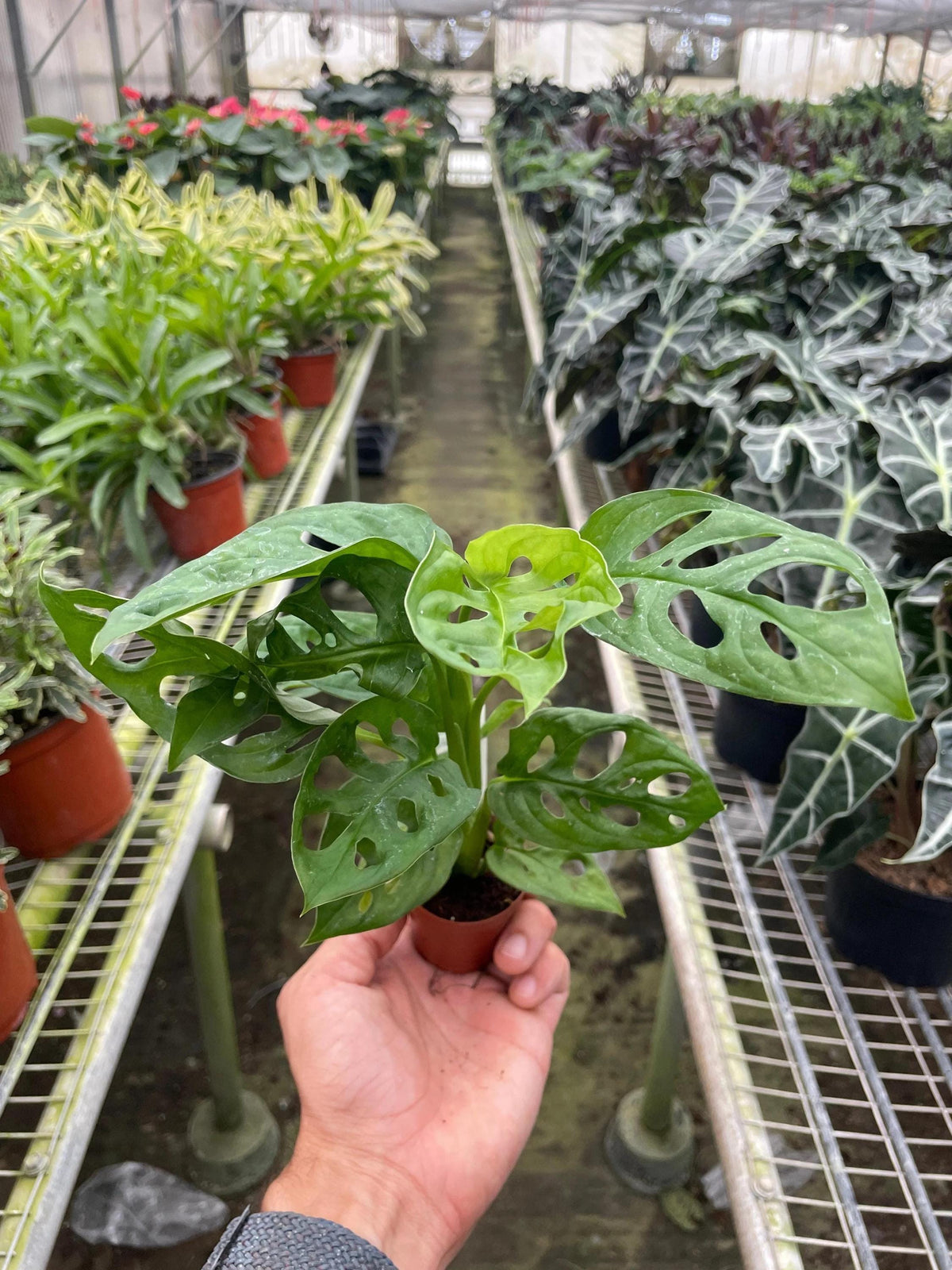
If you're new to this, start with a forgiving plant. The Monstera Adansonii 'Swiss Cheese' and the Philodendron Cordatum 'Heartleaf' grow fast and bounce back quickly. The Zamioculcas Zamiifolia ZZ is slow and only needs a new pot every so often.
Looking for more easygoing plants? Browse our Hard to Kill Plants collection. Let us know if you have any questions!
Happy growing,
Alex
Chief Leaf Officer, Austin Jungle Co.