Prayer Plant Care: Keeping a Maranta Happy Indoors
Prayer plants get their name from what they do at night. The leaves fold up in the evening and open back up in the morning, like hands coming together. If you've never watched it happen, it's pretty fun.
They're not the easiest plant we sell. I'd call them moderate. But once you know what they want, they're not hard.
The short version
Keep the soil evenly moist, give it bright indirect light, raise the humidity without misting, and use filtered or rain water if your tap water is hard. That's most of prayer plant care.
Meet a few marantas
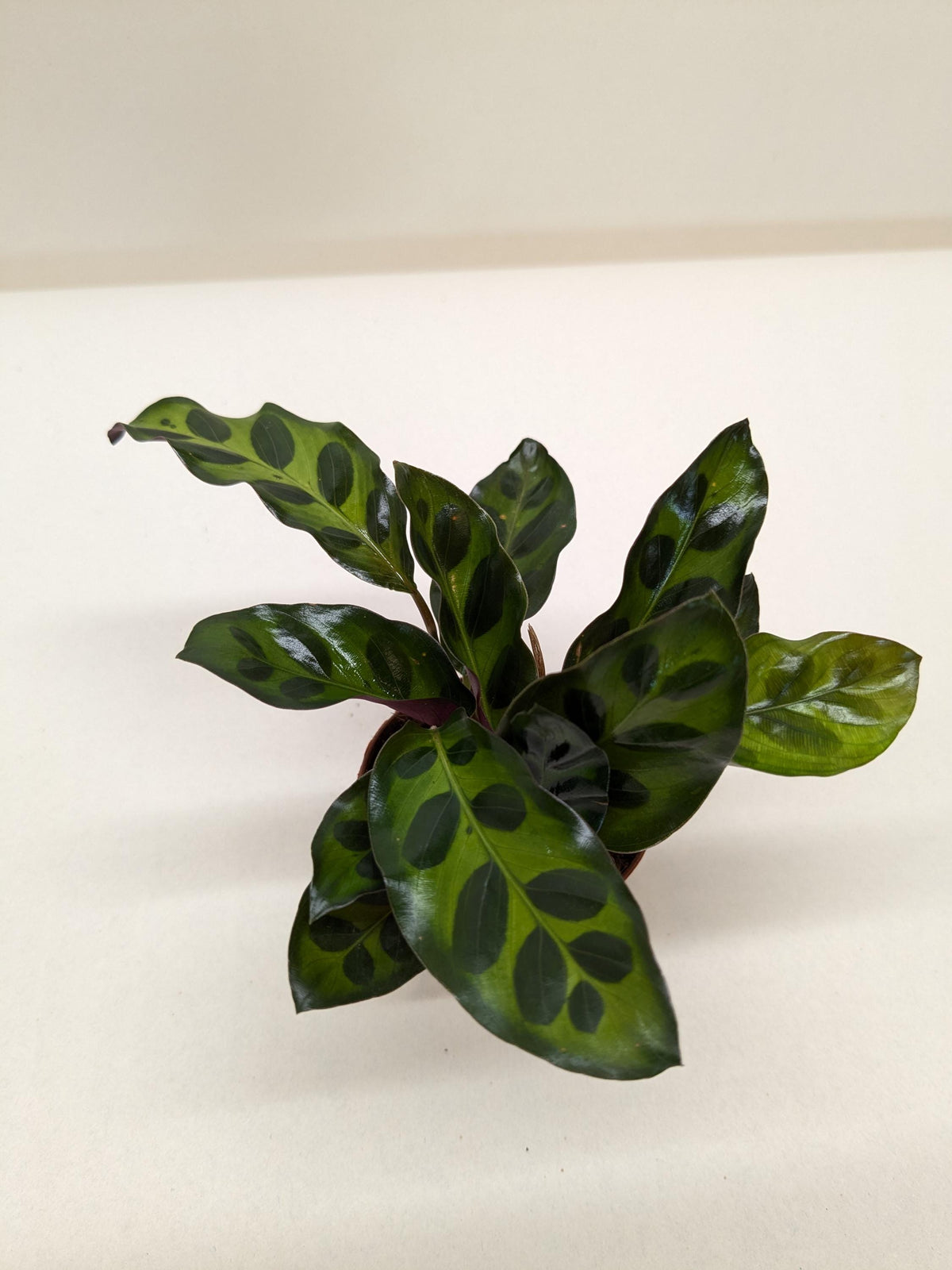
Marantas come from the tropical forests of Brazil, where they grow low on the forest floor, under the canopy. A few we carry:
- Maranta Red Prayer Plant - dark green leaves with bright red veins. One of our best sellers.
- Maranta 'Lemon Lime' - bright green with lime and yellow veining.
- Maranta 'Leuconeura' - the classic prayer plant species.
Light
Medium to bright, indirect light is best. An east-facing window, or a few feet back from a brighter one, works well.
Too much direct sun scorches the leaves and fades the color. Too little light and the colors get dull and growth slows.
Water
This is where most people struggle. Marantas don't like drying out, but they don't like soggy soil either.
- Let the top inch of soil dry, then water thoroughly and let it drain.
- Don't let it go bone dry. The leaves curl and crisp up fast.
- Don't leave it sitting in water. That leads to root rot.
- Hard tap water can cause brown tips. Marantas are sensitive to the salts and minerals in tap water. If you see brown tips, try distilled, filtered or rain water.
If you're not sure how to judge when it's time, our guide to how often to water houseplants walks through it.
Humidity
Marantas love humidity, and a heated house in winter is dry. Skip the spray bottle. Misting doesn't do much and can cause fungus problems. Instead:
- Run a small humidifier nearby.
- Set the pot on a pebble tray.
- Group it with other plants.
These are the same tricks we use for ferns. There are more in our winter fern care post.
Soil and feeding
Use a light, well-draining mix. Adding some perlite or orchid bark keeps it airy so it holds a little moisture without packing down. Feed lightly in spring and summer and skip it in winter.
Propagation
Divide the plant at the roots when you repot, or take stem cuttings and root them in water or soil.
Common issues
- Brown, crispy leaf tips → usually low humidity or hard tap water. Full rundown in brown leaf tips.
- Curling or folded leaves during the day → check the soil. It's usually thirsty or stressed.
- Faded color → too much direct sun, or not enough light.
- Fine webbing, speckled leaves → spider mites. They love a dry maranta. Raise the humidity, wipe the leaves and treat early with neem oil or insecticidal soap.
- A few yellow leaves after shipping → normal stress. Give it a week or two.
Prayer plants and pets
If you have pets, check your exact plant on the ASPCA list, and keep it out of reach to be safe.
The takeaway
Even moisture, good indirect light and some extra humidity. Give a prayer plant that, and you get to watch it fold up every night. See every variety we carry in our Maranta collection, and check the Plant Care Guide for the rest of your plants. Let us know if you have any questions!
Keep reading
- Brown Leaf Tips: What Causes Them
- How Often Should You Water Houseplants?
- Winter Fern Care: How to Stop the Crispy Fronds
Happy growing,
Alex
Chief Leaf Officer, Austin Jungle Co.