ZZ Plant vs Snake Plant: Which One Should You Get?
People ask me this one a lot. ZZ plant vs snake plant - which one is easier? Honestly, both. They're two of the toughest houseplants you can buy, and they fail the same way: too much water.
So the real question isn't which one is easier. It's which one fits your space and your style.
The short version
Get a ZZ if you want something shiny and leafy with a softer, arching shape.
Get a snake plant if you want something tall, upright and architectural that fits in a tight corner.
Either way, water less than you think you should.
What they have in common
Both come from Africa, and both store water so they can get through dry spells.
- The ZZ (Zamioculcas zamiifolia) stores water in thick, potato-like rhizomes under the soil.
- The snake plant (Sansevieria) stores water in its thick, sword-like leaves.
That's why they both put up with being ignored. It's also why they both rot when they sit in wet soil. Overwatering is the number one way people lose either one.
They also share a few other habits:
- They tolerate low light, but grow better in brighter, indirect light.
- They're slow growers.
- They like a well-draining mix and a pot with a drainage hole.
- Neither one is cold-hardy, so keep them away from cold drafts in winter.
Looks
This is where they really split.
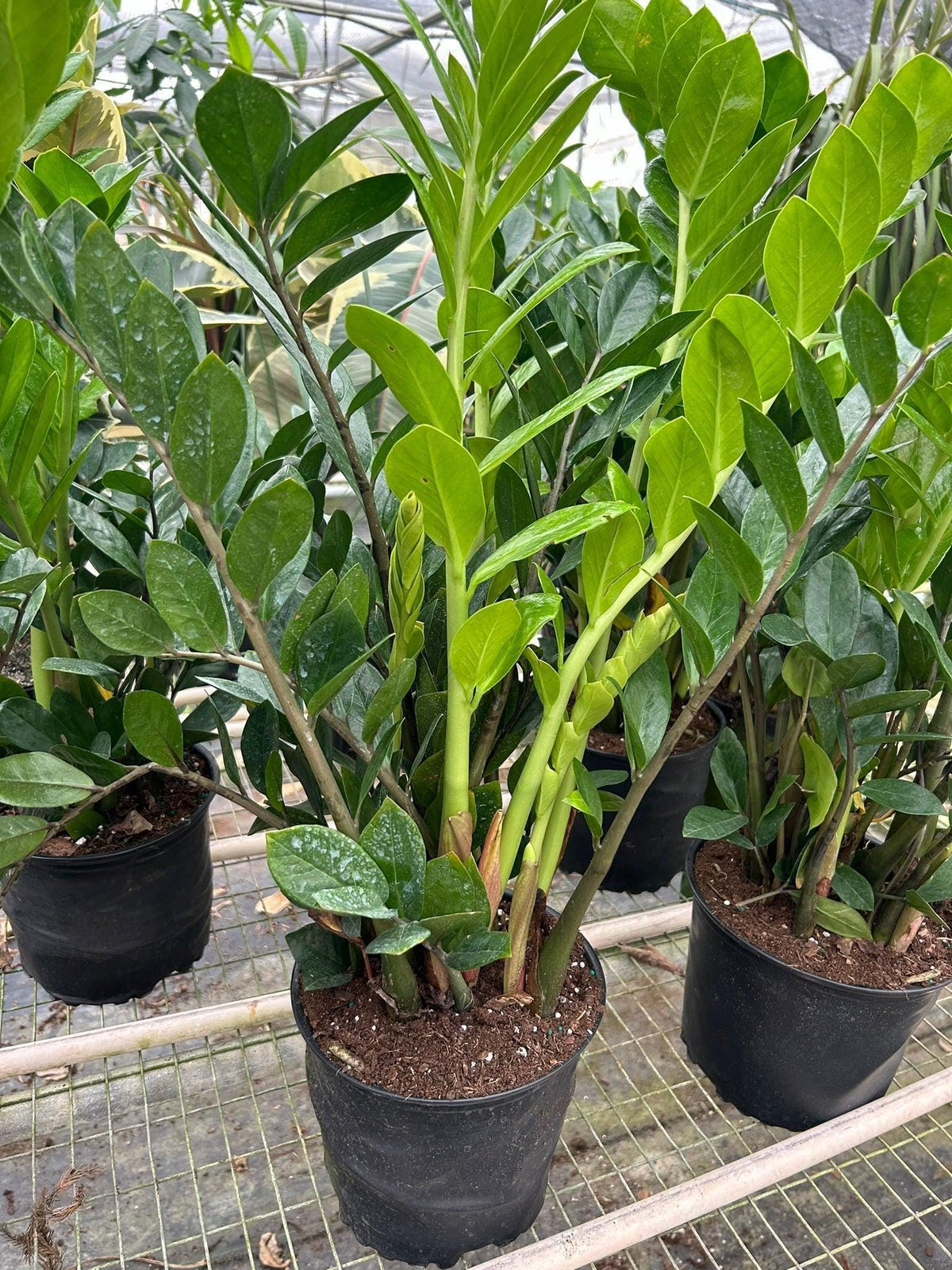
The ZZ has upright, arching stems lined with glossy, dark green leaflets. It looks full and leafy. Our ZZ 'Black Queen' takes it further, with new growth that deepens to an almost black green.
The snake plant grows straight up in stiff, flat leaves. It looks clean and modern, and it takes up very little floor space. The Snake Plant 'Laurentii' has the classic yellow edges.
Light
Both handle a dim room better than most plants. But "handles it" isn't the same as "likes it."
- ZZ: medium to bright indirect light is best. Avoid strong direct sun, which can scorch the waxy leaves.
- Snake plant: bright indirect light is best, and it can handle low light like a champ. More light means faster growth and better color.
If your spot is really dark, either one will hang in there. Just expect very slow growth.
Water
Same rule for both: let the soil dry out completely before you water again. Not just the top inch. All the way down.
Then water thoroughly, let it drain, and dump any water left in the saucer. In winter, water even less.
The difference is in how they tell you something's wrong:
- ZZ: yellow leaves usually mean overwatering. Soft, mushy stems at the base can mean root rot.
- Snake plant: wrinkled or bending leaves usually mean it's thirsty. A mushy base means overwatering or rot.
More on reading those signs in our overwatered vs underwatered plant guide.
Soil
- ZZ: a well-draining potting mix, with some perlite or sand added.
- Snake plant: a cactus or succulent mix, or regular mix with sand or perlite.
Growth and propagation
Both are slow, but the snake plant is easier to multiply.
- Snake plant: divide the clump, or root leaf cuttings in soil or water. Heads up, variegated types like the Laurentii can lose their yellow edges from leaf cuttings. Division keeps them true to type.
- ZZ: you can root a leaf or stem cutting, but it can take months. Dividing the rhizomes when you repot is much faster.
Pets and kids
Both are mildly toxic if eaten, so keep them out of reach of pets and little kids who chew on things. If you have pets, check your exact plant on the ASPCA list.
So which one?
- Tight corner or narrow shelf: snake plant.
- Want something leafy and full: ZZ.
- Office with no window nearby: either one, but the ZZ is a common pick for this.
- Want to make more plants for friends: snake plant.
- Can't decide: get both. They like the same care, so you can water them on the same day.
For full care on each, read our snake plant care post and our ZZ plant care guide. And for care on everything else, check out our Plant Care Guide.
Shop them
Start with the classic Zamioculcas Zamiifolia ZZ, or browse our full Snake Plant collection. If you want more plants that put up with a busy life, our Hard to Kill Plants collection is the place to start. Let us know if you have any questions!
Happy growing,
Alex
Chief Leaf Officer, Austin Jungle Co.