Calathea Care: How to Keep a Calathea Happy Indoors
Calatheas have a reputation for being dramatic. Honestly, it's a little earned. But they're not impossible. They just want the same few things every day, and once you give them that, they settle down.
Here's the calathea care routine we'd give a friend.
The short version
Bright indirect light, soil that stays lightly moist (never soggy), extra humidity, and filtered or distilled water if your tap water is hard. That covers most of it.
Light
Calatheas grow under the jungle canopy in Central and South America, so they're used to filtered light.
- Best: bright, indirect light. Near a window, but out of the sunbeam.
- OK: lower light. They'll live, but the patterns can fade.
- Avoid: direct sun. It scorches those painted leaves fast.
If the leaves look washed out or the stripes are fading, try a brighter spot. If you see dry, bleached patches, pull it back from the window.
Water
This is where most calatheas go wrong, in both directions.
- Keep the soil lightly moist. They hate drying out all the way.
- Don't let it sit wet. Soggy soil leads to root rot, which looks a lot like thirst. That's the tricky part.
- Check with your finger. If the top inch is starting to dry, water thoroughly and let the extra drain out.
- Use filtered or distilled water if you can. Calatheas are sensitive to salts and chemicals in tap water, and that often shows up as crispy brown edges.
In winter, growth slows, so the soil stays wet longer. Check before you water instead of watering on a schedule.
Humidity
Calatheas like more humidity than most homes have, especially once the heat comes on.
- Run a small humidifier nearby.
- Set the pot on a pebble tray with water (keep the pot above the waterline).
- Group a few plants together.
Skip the misting. It doesn't raise humidity for long and it can lead to fungus problems on the leaves. We get into more options in how to raise humidity for plants without misting.
Temperature
Keep them warm and steady, away from cold drafts, doors and heating vents. Normal room temperatures are fine. A blast of cold air is one of the fastest ways to get curled, damaged leaves.
Soil and repotting
Use a rich, well-draining mix that holds some moisture, like potting soil with peat or coco coir. The pot needs a drainage hole.
Repot only when it's outgrowing its pot, and spring is the best time. Division is the way to make more calatheas. Split a healthy plant at the roots when you repot.
Why do calathea leaves move?
That's normal, and it's one of the best things about them. Calatheas fold their leaves up at night and lower them during the day. It's the same trick that gives the prayer plant its name. If your plant is moving, it's alive and well.
Common issues
- Crispy brown edges → usually low humidity, tap water, or the soil drying out too much. More on that in why plants get brown crispy tips.
- Leaves curling inward → usually thirsty or the air is too dry. Check the soil first.
- Yellow leaves with soggy soil → too much water. Let it dry slightly and check the roots.
- Drooping → often thirst or stress. Check soil moisture before anything else.
- Fine webbing or speckled leaves → spider mites. They love dry calatheas. Wipe the leaves, isolate the plant, and treat early with neem oil or insecticidal soap.
- A few tired leaves after shipping → normal. Give it a week or two before you change anything.
Which calathea should I start with?
They all need the same basic care, so pick the one you like looking at.
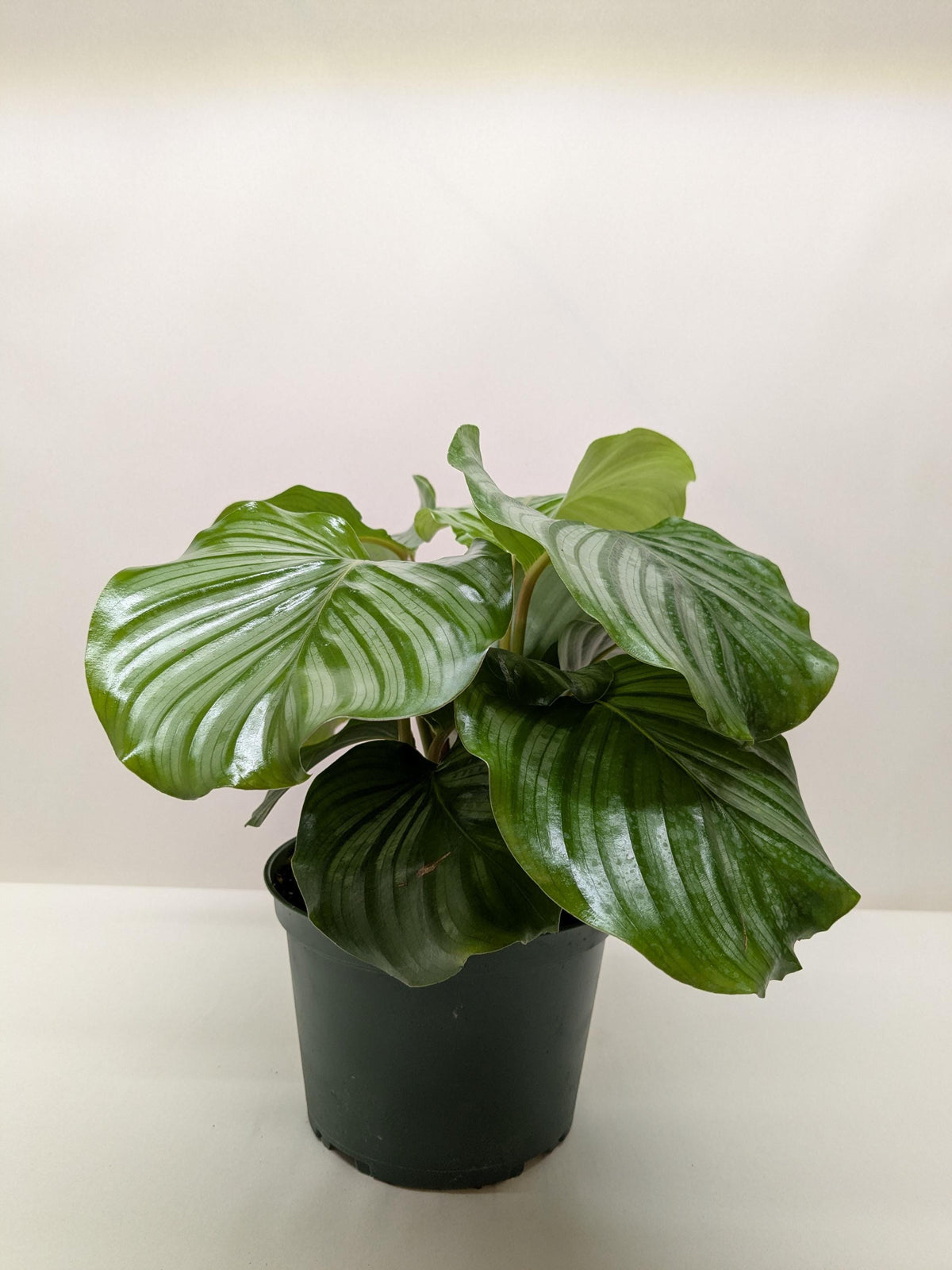
- Calathea 'Ornata' - deep green leaves with thin pink pinstripes. A classic.
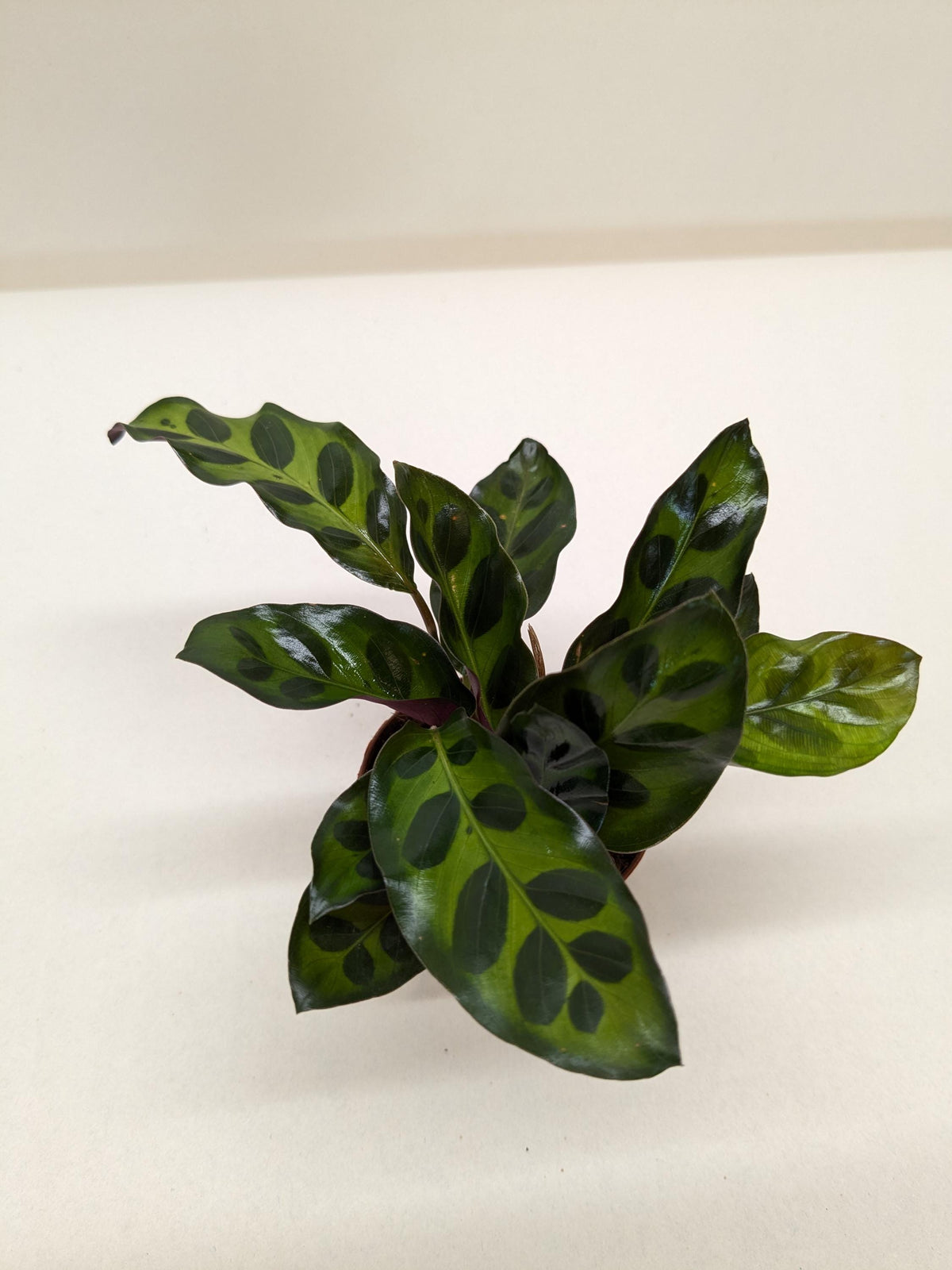
- Calathea Lancifolia 'Rattlesnake' - long wavy leaves with dark spots and purple undersides. One of the easier ones to keep looking good in our experience.
- Calathea 'Makoyana' - the peacock plant, with a feathered pattern that looks hand painted.
Calatheas and pets
If you have pets, check your exact plant on the ASPCA list before it goes on a low shelf.
The takeaway
Steady moisture, bright indirect light, decent humidity and good water. Calatheas aren't hard. They just don't like surprises. For care on everything else, check out our Plant Care Guide.
Ready to try one? Browse our Calathea collection. Let us know if you have any questions!
Keep reading
- Brown crispy leaf tips: what causes them and how to fix it
- Prayer plant care
- Winter fern care (another humidity lover)
Happy growing,
Alex
Chief Leaf Officer, Austin Jungle Co.